



Explore Comprehensive Military History Books & Guides: Your Ultimate Resource for In-Depth War and Strategy Knowledge
Military history is a vast and intricate field that encompasses the study of wars, battles, strategies, and the leaders who shaped the course of history. This article serves as a comprehensive guide to military history books and resources, providing insights into the best literature available for understanding the complexities of warfare. Readers will discover essential titles that cover major wars, military strategies, battlefield analyses, and biographies of influential military leaders. As many individuals seek to deepen their understanding of military history, this guide addresses the need for reliable and informative resources. The following sections will explore top-rated military history books, the value of military strategy manuals, insights from battlefield analysis literature, must-read biographies, and the role of interactive timelines in enhancing learning.
What Are the Best Military History Books Covering Major Wars?
Military history books provide invaluable insights into the events that have shaped nations and societies. They cover various themes, including tactics, leadership, and the socio-political contexts of wars. This section highlights some of the best military history books that focus on major wars, offering readers a curated selection of essential readings.
Top-Rated Books on World War History and Key Battles
Several titles stand out in the realm of World War history, each providing unique perspectives and analyses. Notable books include:
- “The Second World War” by Sir Winston Churchill: This six-volume series offers a comprehensive account of the war from one of its key leaders, providing insights into military strategies and political decisions.
- “The Guns of August” by Barbara W. Tuchman: This Pulitzer Prize-winning book details the events leading up to World War I, focusing on the first month of the conflict and the decisions that shaped its course.
- “Band of Brothers” by Stephen E. Ambrose: This narrative follows Easy Company of the 506th Parachute Infantry Regiment during World War II, highlighting their experiences from D-Day to the war’s end.
These books not only recount historical events but also delve into the human experiences behind them, making them essential reads for anyone interested in military history.
How Do Military Strategy Manuals Enhance Understanding of Warfare?


Military strategy manuals are crucial for understanding the principles and tactics that govern warfare. These texts provide frameworks for analyzing military operations and decision-making processes. They serve as educational resources for both military professionals and enthusiasts alike.
Essential Guides on Military Tactics and Strategic Evolution
Key manuals that have shaped military thought include:
- “On War” by Carl von Clausewitz: This foundational text explores the nature of war and the interplay between politics and military strategy, emphasizing the importance of understanding the fog of war.
- “The Art of War” by Sun Tzu: An ancient Chinese treatise that remains relevant today, it outlines strategies for effective leadership and conflict resolution.
- “Makers of Modern Strategy from Machiavelli to the Nuclear Age” edited by Peter Paret: This collection examines the evolution of military strategy through various historical contexts, providing insights into how strategies have adapted over time.
These manuals not only enhance understanding but also offer practical applications for contemporary military strategy.
Influential Military Leaders and Their Strategic Contributions
The study of military leaders is essential for grasping the complexities of warfare. Influential figures such as Napoleon Bonaparte, Dwight D. Eisenhower, and Genghis Khan have left indelible marks on military strategy and tactics. Their contributions can be explored through various biographies and analyses that highlight their leadership styles and decision-making processes.
What Insights Do Battlefield Analysis Books Provide?
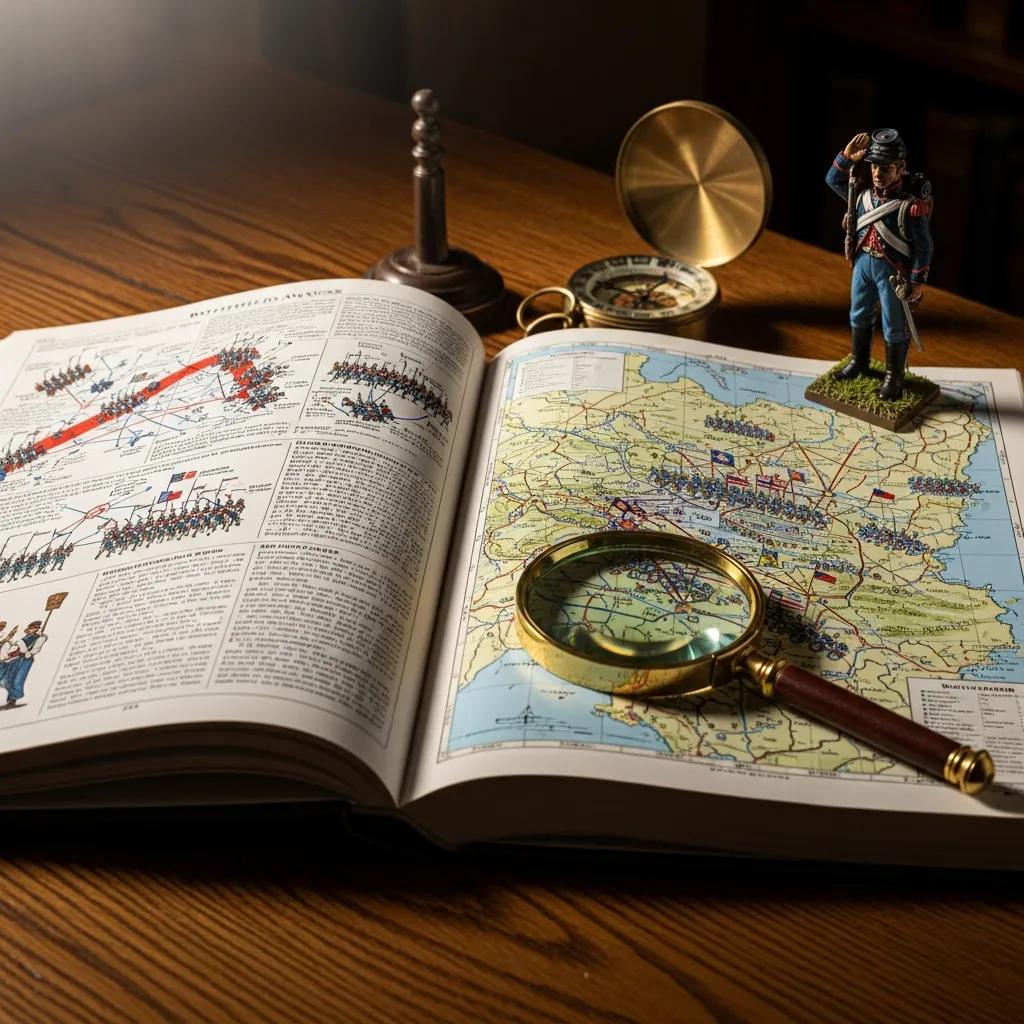
Battlefield analysis books offer detailed examinations of specific military engagements, providing context and understanding of the strategies employed. These texts are invaluable for both historians and military professionals seeking to learn from past conflicts.
Detailed Battle Maps and Timelines for Historical Context
Effective battlefield analysis often includes detailed maps and timelines that illustrate the progression of battles. These visual aids enhance comprehension by providing a clear representation of troop movements and strategic decisions. For example, books that include maps of the Battle of Gettysburg or the Normandy Invasion allow readers to visualize the complexities of these engagements.
Case Studies of Pivotal Military Engagements
Case studies of pivotal battles, such as the Battle of Stalingrad or the D-Day landings, provide in-depth analyses of the factors that led to victory or defeat. These studies often examine the decisions made by commanders, the morale of troops, and the impact of terrain on the outcomes of battles.
Which Biographies of Military Leaders Are Must-Reads?
Biographies of military leaders offer personal insights into the lives and decisions of those who shaped history. These narratives provide context for understanding their strategies and the challenges they faced.
Profiles of Influential Generals and Commanders
Notable biographies include:
- “Grant” by Ron Chernow: This biography of Ulysses S. Grant explores his military career and presidency, shedding light on his leadership during the Civil War.
- “The Last Lion: Winston Spencer Churchill” by William Manchester: This three-volume biography details Churchill’s life, focusing on his role during World War II and his impact on British history.
- “Alexander the Great” by Robin Lane Fox: This account of Alexander’s life and conquests provides insights into his military genius and the strategies that led to his success.
These biographies not only recount historical events but also delve into the personal qualities that defined these leaders.
How Leadership Shaped Military Outcomes
The role of leadership in military success cannot be overstated. Effective leaders inspire their troops, make critical decisions under pressure, and adapt to changing circumstances. Understanding the leadership styles of figures like General Patton or Admiral Nelson can provide valuable lessons for contemporary military and organizational leadership.
How Can Interactive Timelines and Multimedia Enhance Military History Learning?
Incorporating interactive timelines and multimedia resources can significantly enhance the learning experience for those studying military history. These tools provide dynamic ways to engage with historical content.
Incorporating Visual Timelines and Battle Maps in Guides
Visual timelines and battle maps can help learners grasp the chronological sequence of events and the spatial relationships between different military actions. For instance, interactive maps that allow users to explore the movements of troops during key battles can deepen understanding and retention of information.
Using Video Documentaries to Complement Written Content
Video documentaries serve as powerful supplements to written texts, bringing historical events to life through visuals and expert commentary. Documentaries on significant battles or military leaders can provide context and emotional resonance that enhance the learning experience.
What Are the Latest Trends in Military History Readership and Digital Consumption?
The landscape of military history readership is evolving, with digital formats becoming increasingly popular. Understanding these trends can help publishers and educators adapt to the changing preferences of their audiences.
Recent Statistics on Military History Education and Interest
Recent studies indicate a growing interest in military history among younger audiences, particularly through digital platforms. Online courses, podcasts, and e-books are becoming popular formats for learning about military history, reflecting a shift in how information is consumed.
Future Directions for Military History Publications
As technology continues to advance, the future of military history publications may include more interactive and multimedia-rich content. Publishers are likely to explore innovative ways to engage readers, such as augmented reality experiences that allow users to immerse themselves in historical events.
This table highlights some of the most influential military history books, showcasing their authors and the specific focus areas that make them essential reads for anyone interested in military history.